


Natural History
Andréhn-Schiptjenko Paris
5th September - 10th October, 2026
Rooted in an extended period of visual and auditory research into the Grenada Revolution (1979–1983), the exhibition draws on photographic archives, personal correspondence, audio recordings, textile craft, and 16mm film to reckon with an open-ended retelling of one of the most consequential, and overlooked, episodes of the Black Power era.
Read more here.
Documentation by Alexandra de Cossette
Andréhn-Schiptjenko Paris
5th September - 10th October, 2026
Rooted in an extended period of visual and auditory research into the Grenada Revolution (1979–1983), the exhibition draws on photographic archives, personal correspondence, audio recordings, textile craft, and 16mm film to reckon with an open-ended retelling of one of the most consequential, and overlooked, episodes of the Black Power era.
Read more here.
Documentation by Alexandra de Cossette

Natural History (Radio Free Grenada)
Digital Commission
2026 - 2036
Taking the form of an interactive digital map of Grenada, the project reimagines historical geography through sound, site and archival encounter. Built around topographical maps of the island from British colonial archives and the present day, Mostyn’s interactive depositary invites movement across place as a mode of listening.
At each map pin—music, oral testimony and radio recordings unfold as material presence. Sound becomes the connective logic, charting political life, everyday rhythms and the sonic formations that shaped revolutionary consciousness across the Caribbean. What emerges is not a single narrative, but a constellation of speech, song and site.
- excerpt from curatorial text by Jade Foster
Read more here.
Designed by Thomas Bush, and commissioned by Primary Nottingham, with support from the Paul Mellon Centre.
Digital Commission
2026 - 2036
Taking the form of an interactive digital map of Grenada, the project reimagines historical geography through sound, site and archival encounter. Built around topographical maps of the island from British colonial archives and the present day, Mostyn’s interactive depositary invites movement across place as a mode of listening.
At each map pin—music, oral testimony and radio recordings unfold as material presence. Sound becomes the connective logic, charting political life, everyday rhythms and the sonic formations that shaped revolutionary consciousness across the Caribbean. What emerges is not a single narrative, but a constellation of speech, song and site.
- excerpt from curatorial text by Jade Foster
Read more here.
Designed by Thomas Bush, and commissioned by Primary Nottingham, with support from the Paul Mellon Centre.



Language Against Identity
28 September - 27 October, 2024
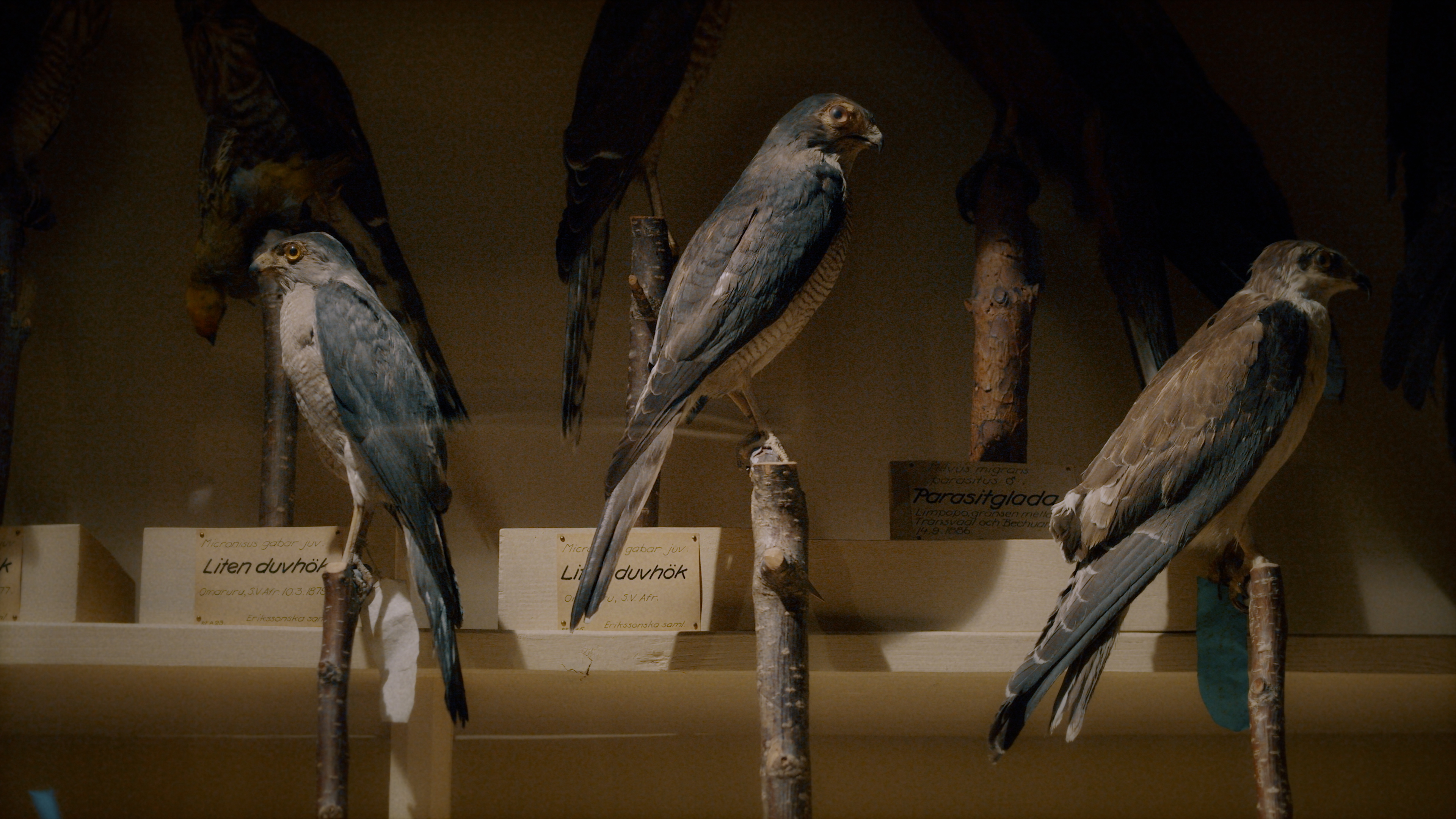
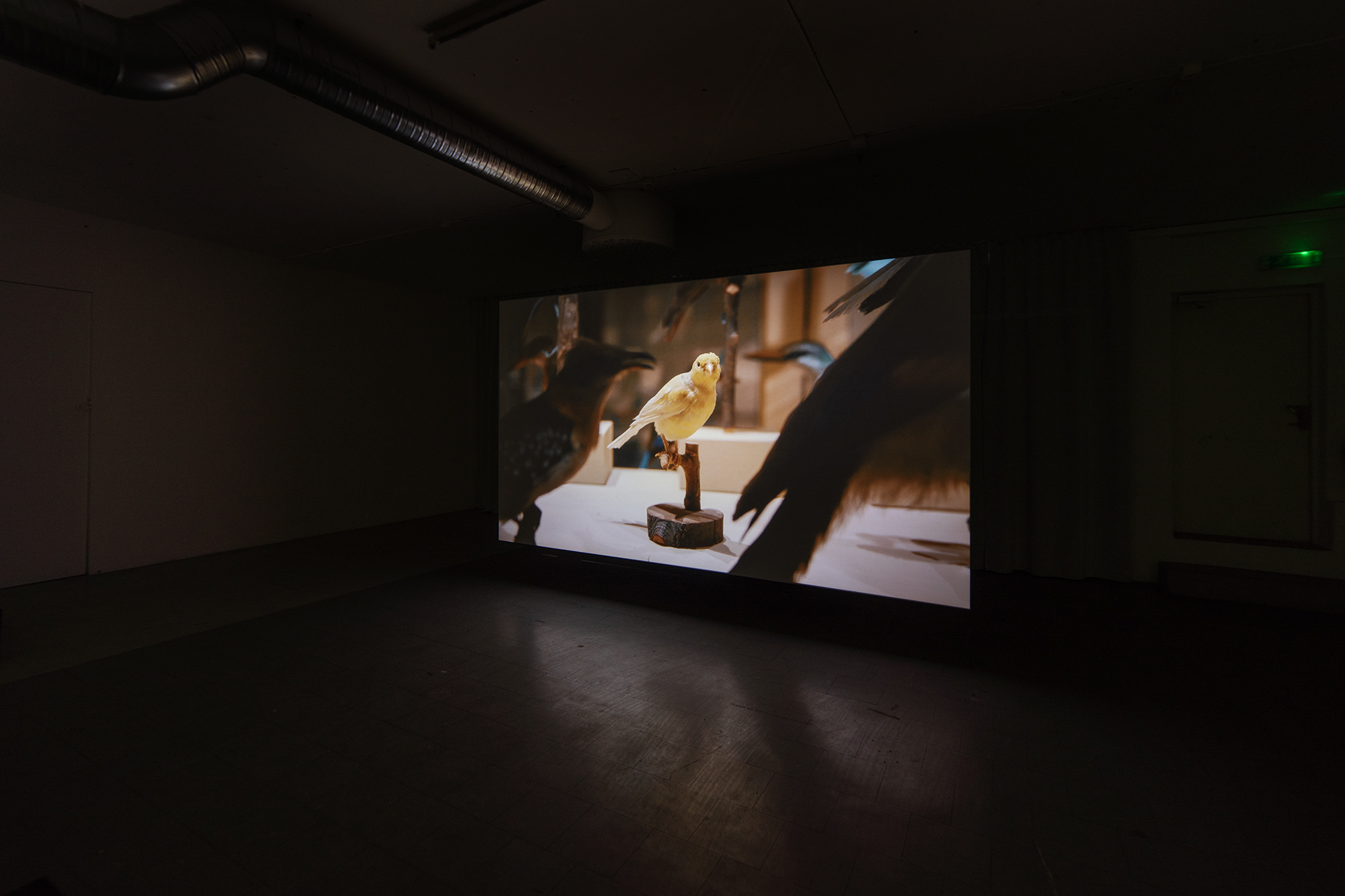
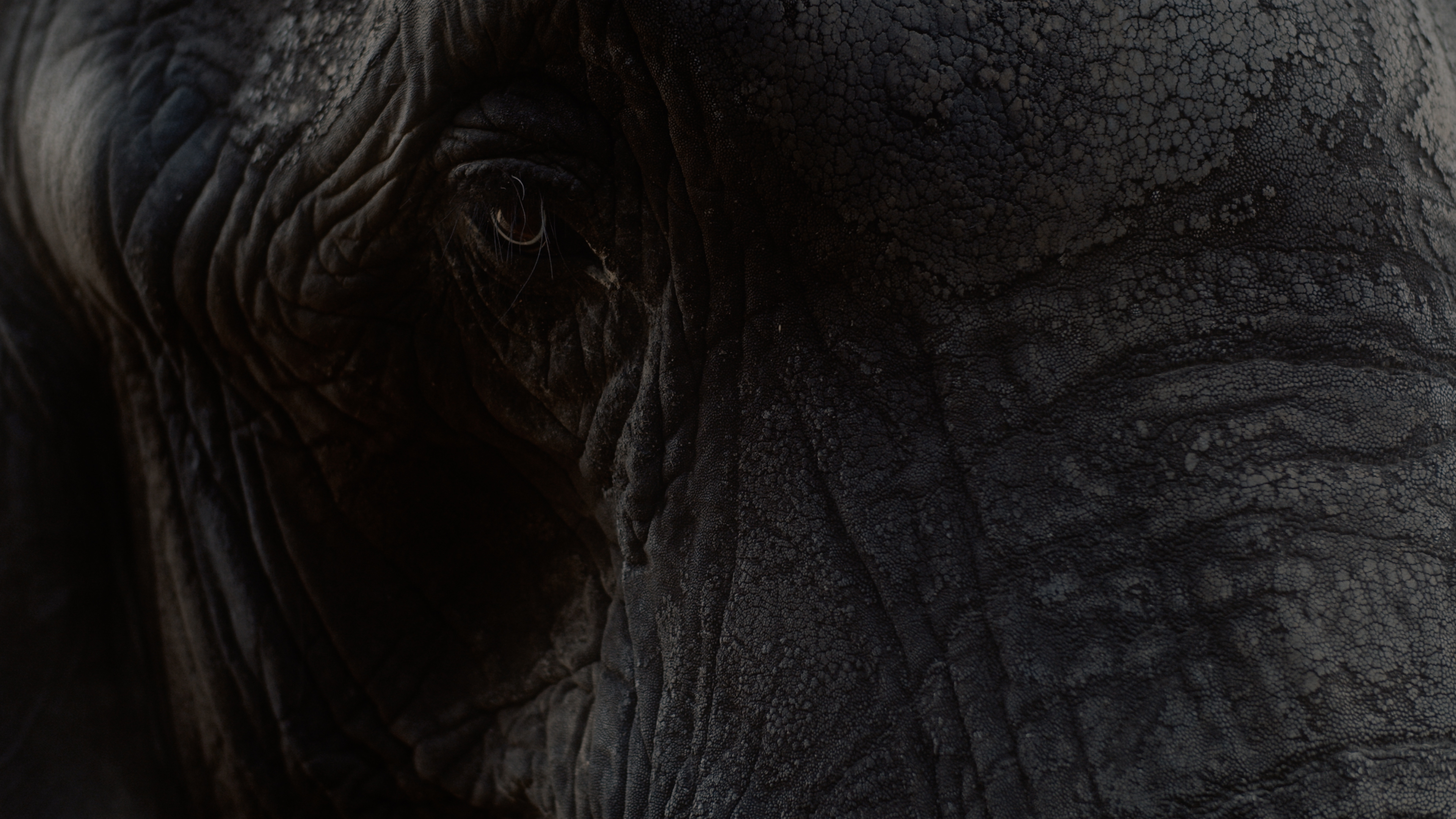
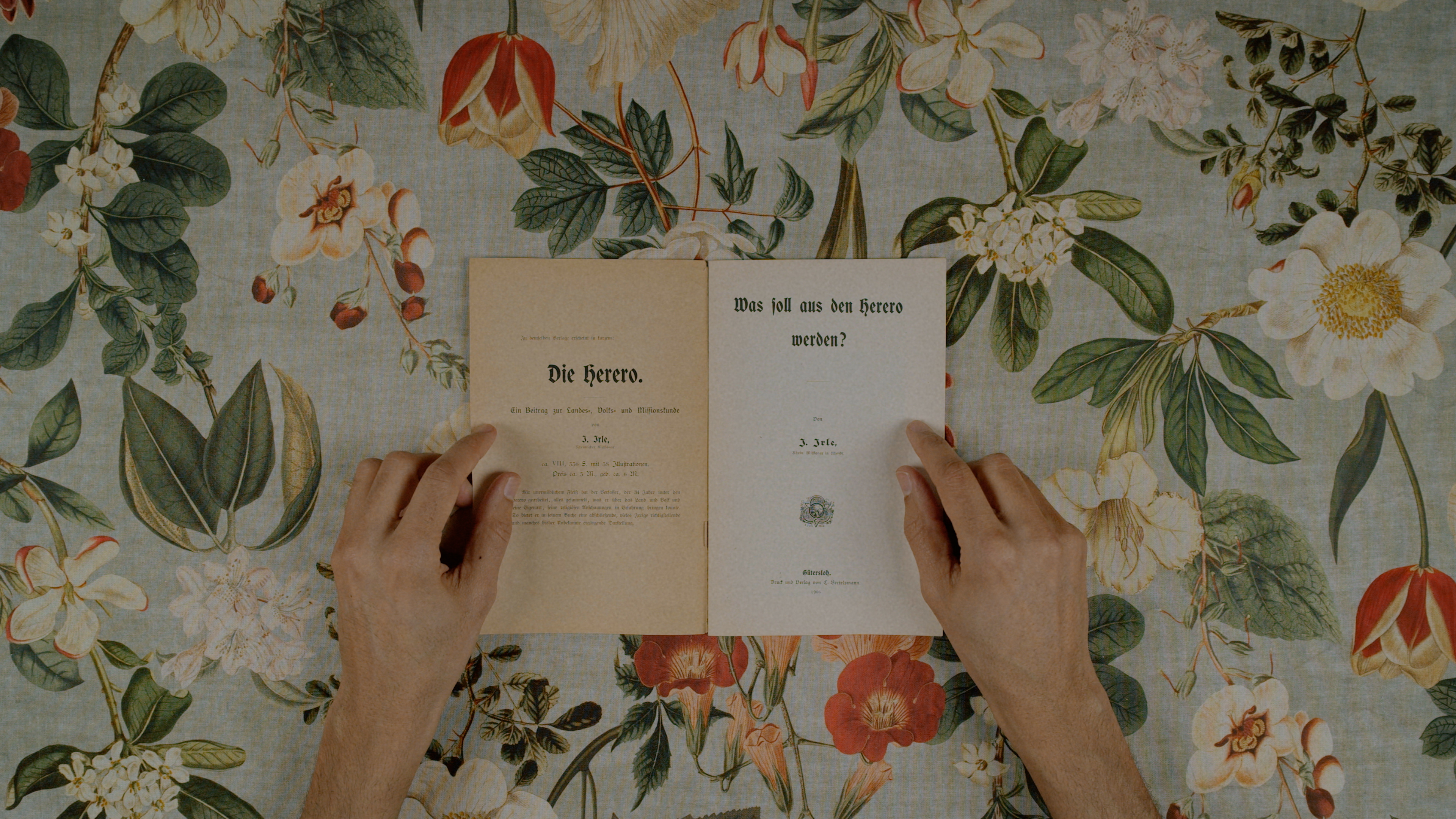
Language Against Identity begins with a sentence, the soft turning of a page, then silence. What soon follows are the whispers of the bush — birds chirping, the scorching breeze, and insects rustling in the savanna grass. Then, a treacherous descent into a historical tale of colonial exploitation, destruction, and extinction.
The eponymous film traces the effects of geographic and cultural displacement by focusing on two case studies of animals that were forcibly taken away from southern Africa and put on display in northern Europe... [continue reading]
- text by Tawanda Appiah
Installation photographs: Lena Bergendahl
28 September - 27 October, 2024
Language Against Identity begins with a sentence, the soft turning of a page, then silence. What soon follows are the whispers of the bush — birds chirping, the scorching breeze, and insects rustling in the savanna grass. Then, a treacherous descent into a historical tale of colonial exploitation, destruction, and extinction.
The eponymous film traces the effects of geographic and cultural displacement by focusing on two case studies of animals that were forcibly taken away from southern Africa and put on display in northern Europe... [continue reading]
- text by Tawanda Appiah
Installation photographs: Lena Bergendahl











Dream One
23 September - 12 November, 2022
“You are illiterate in the way leaves are illiterate: they do not read, they are there to be read; and if they are properly read, they create their own literature.”
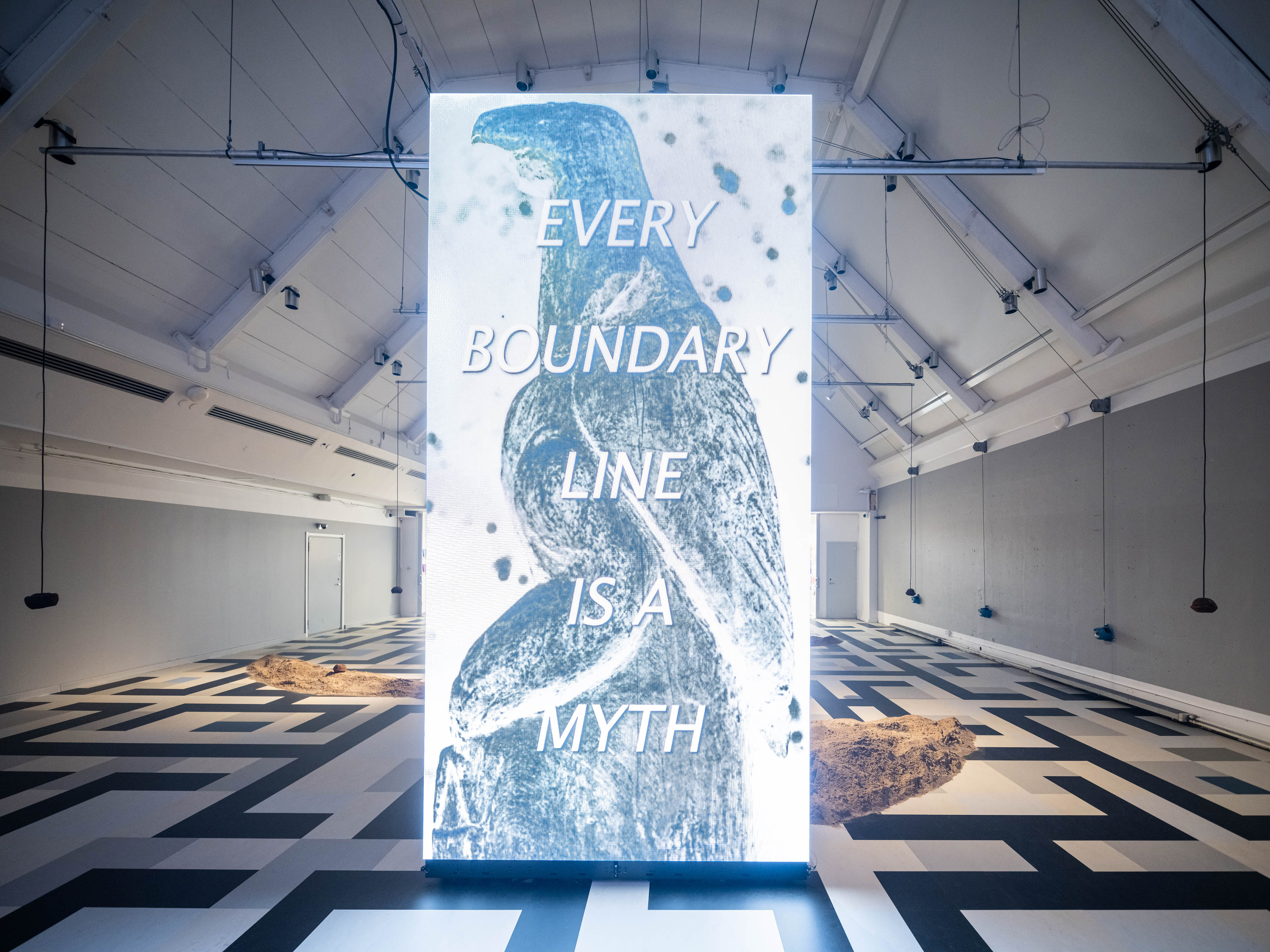
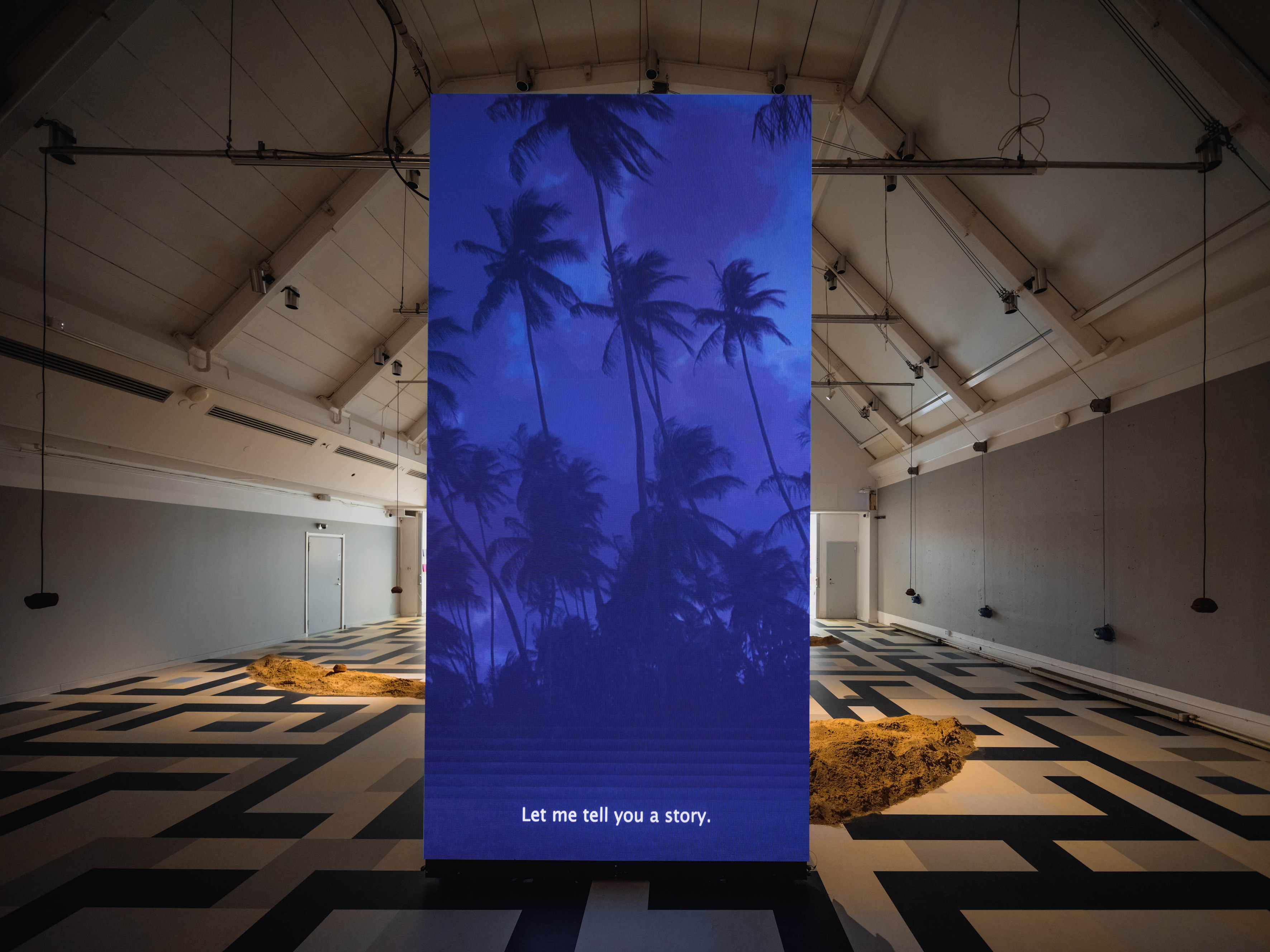
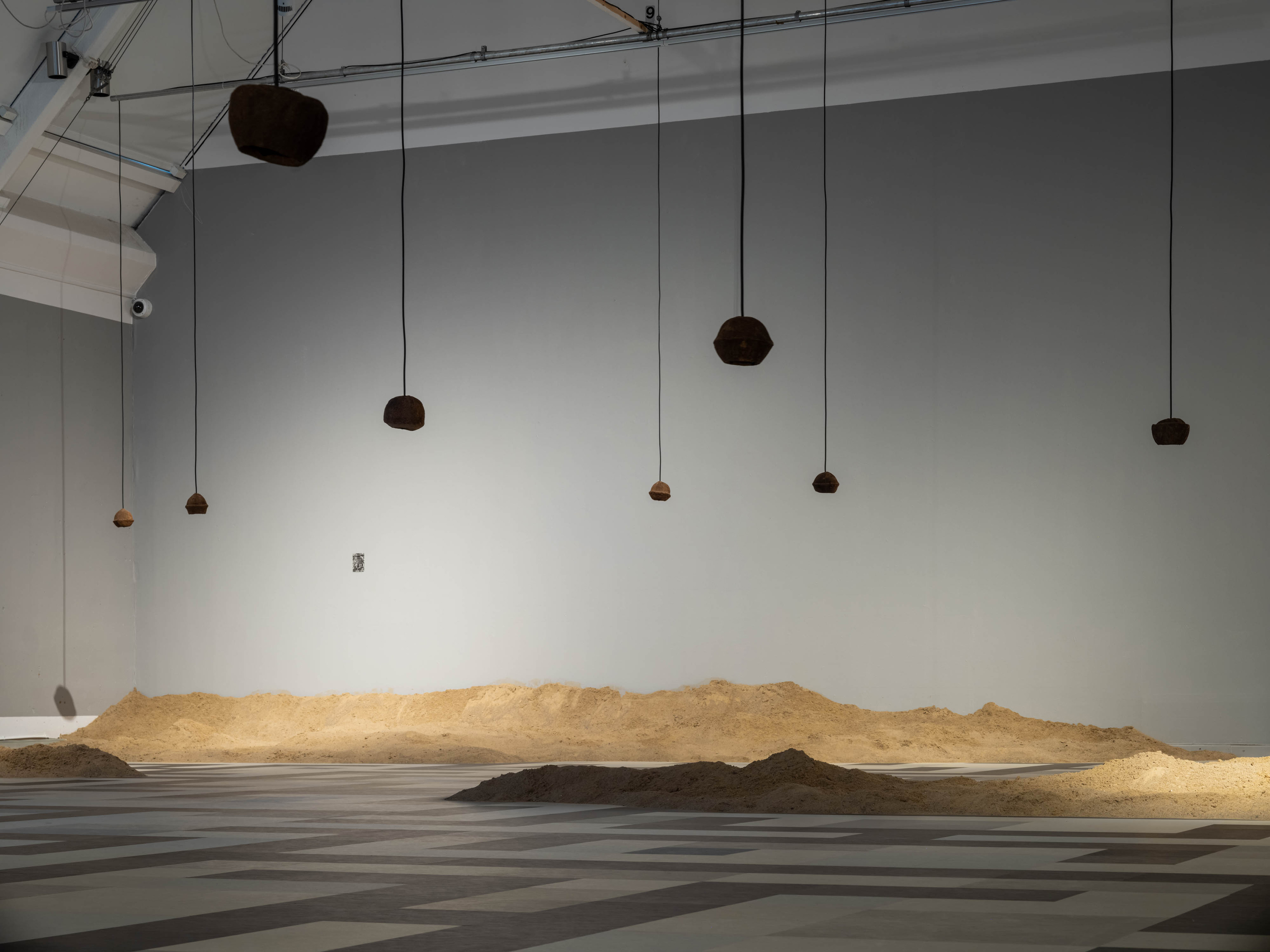
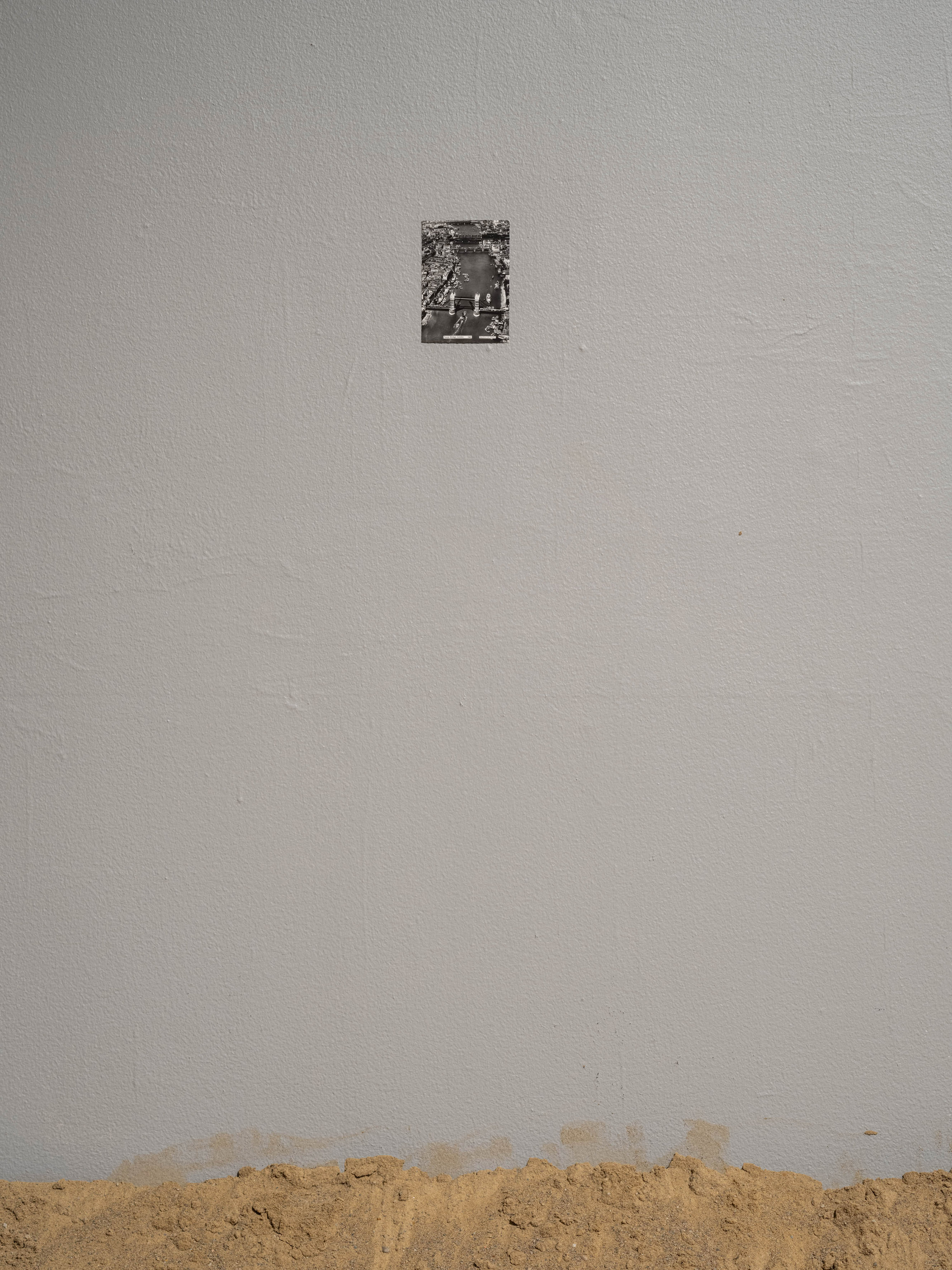
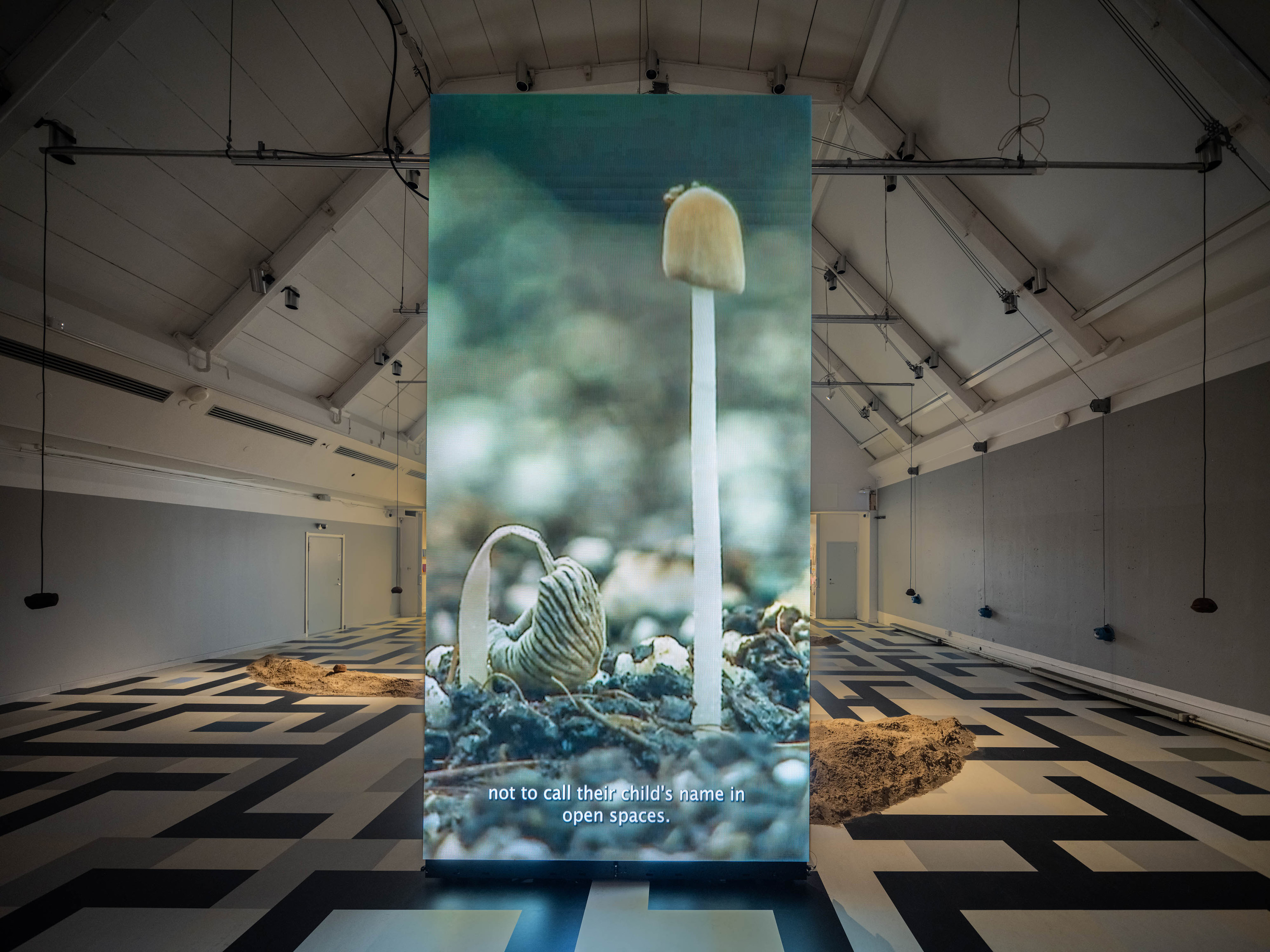
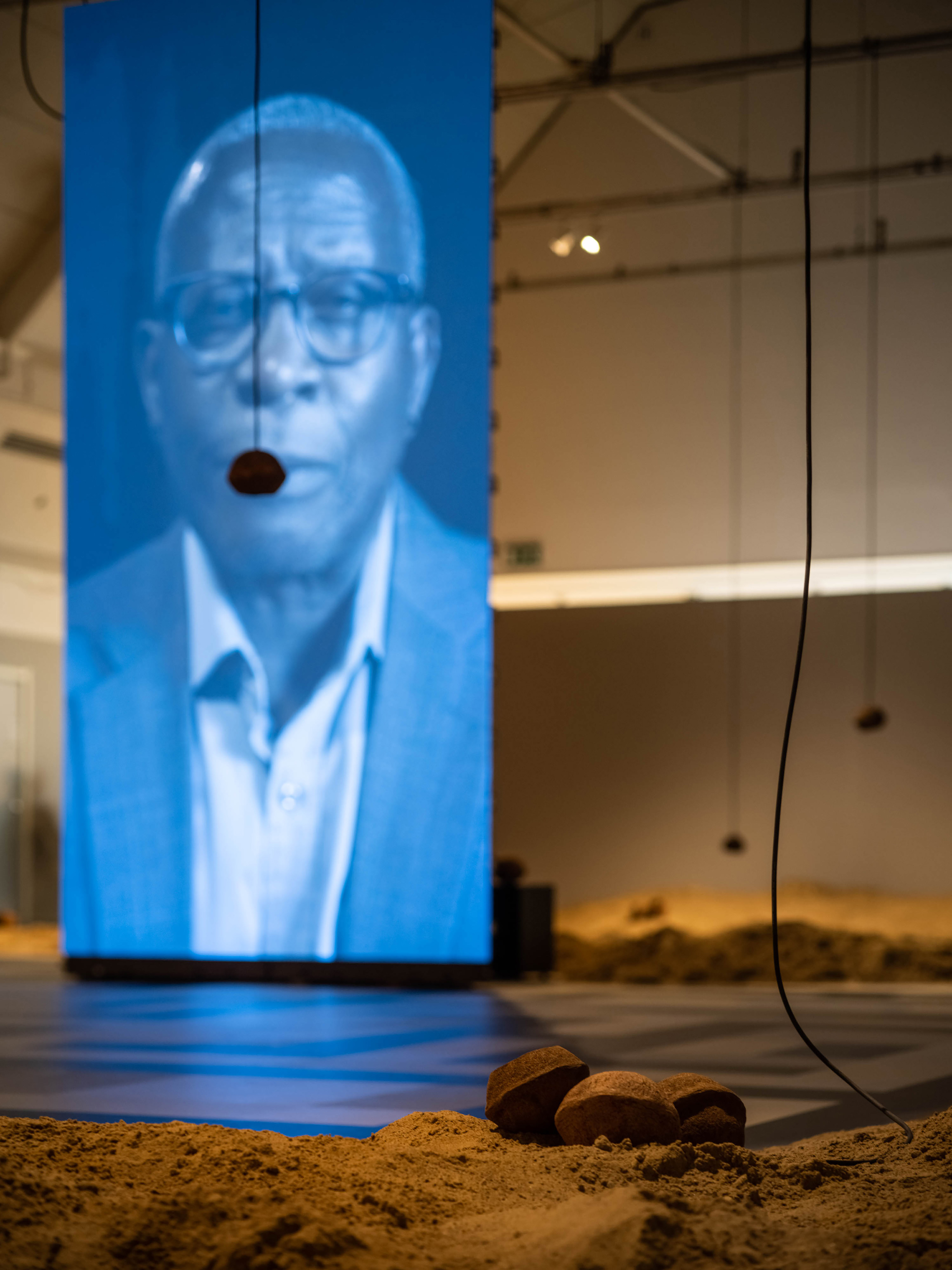
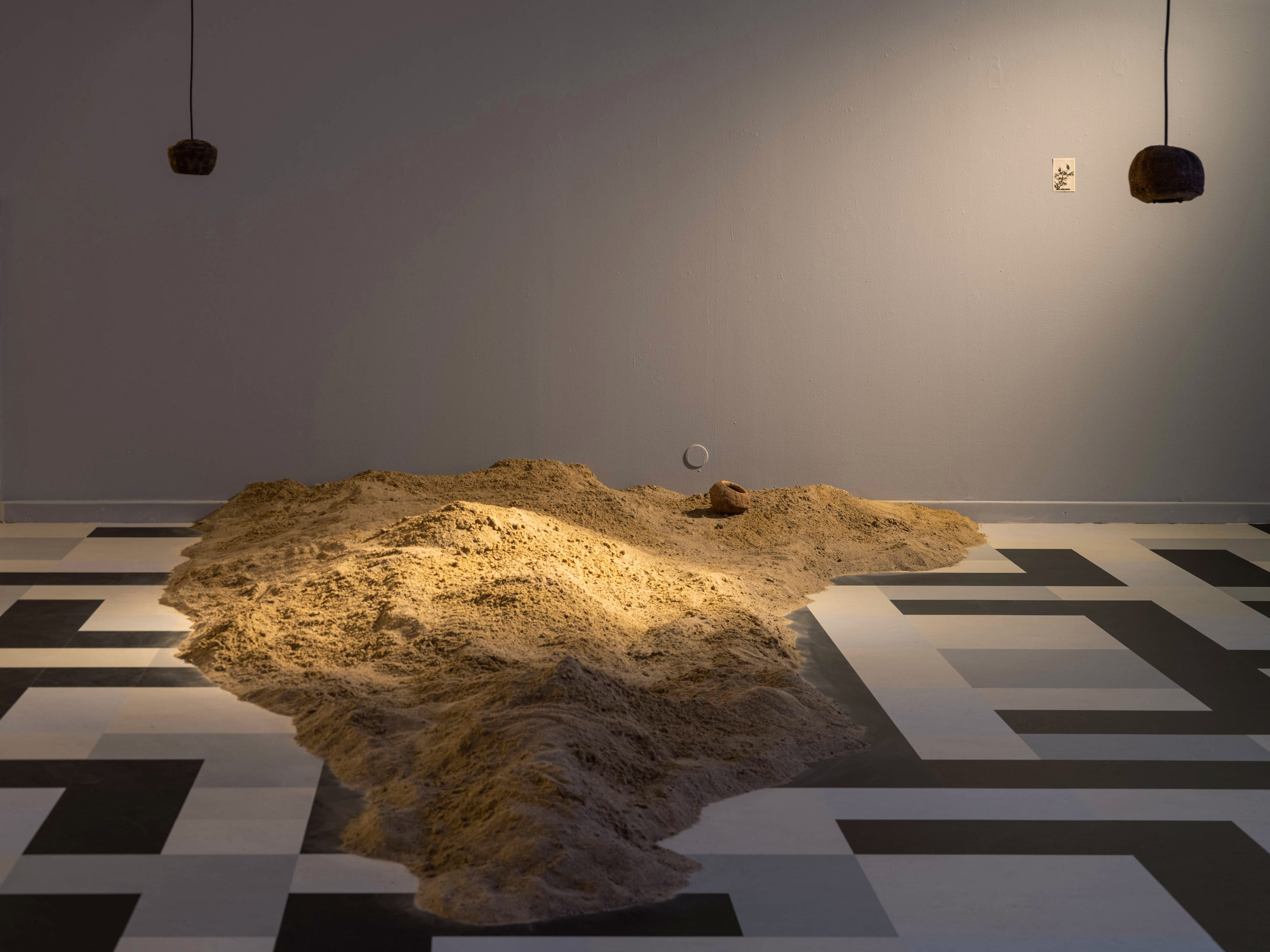
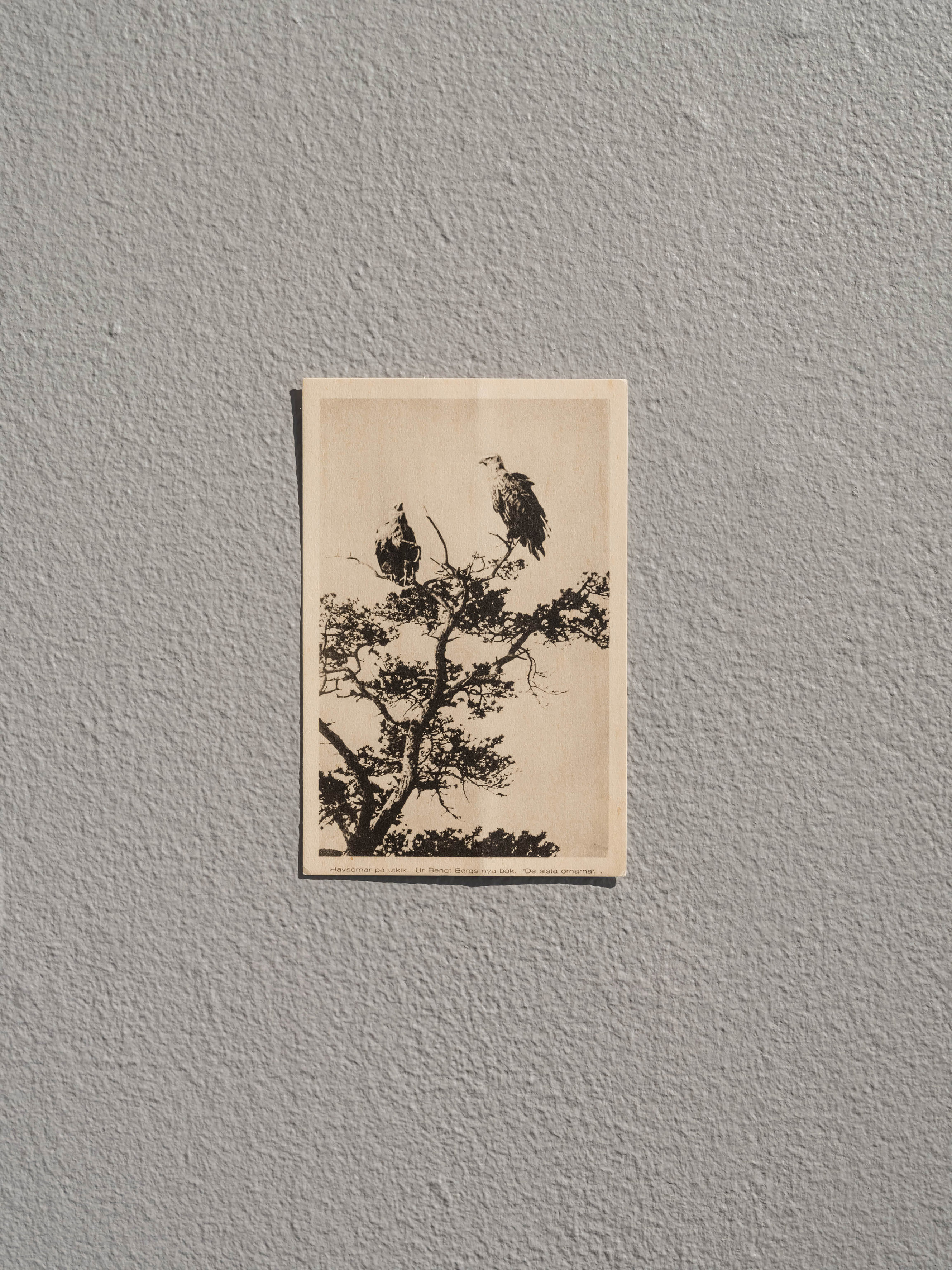
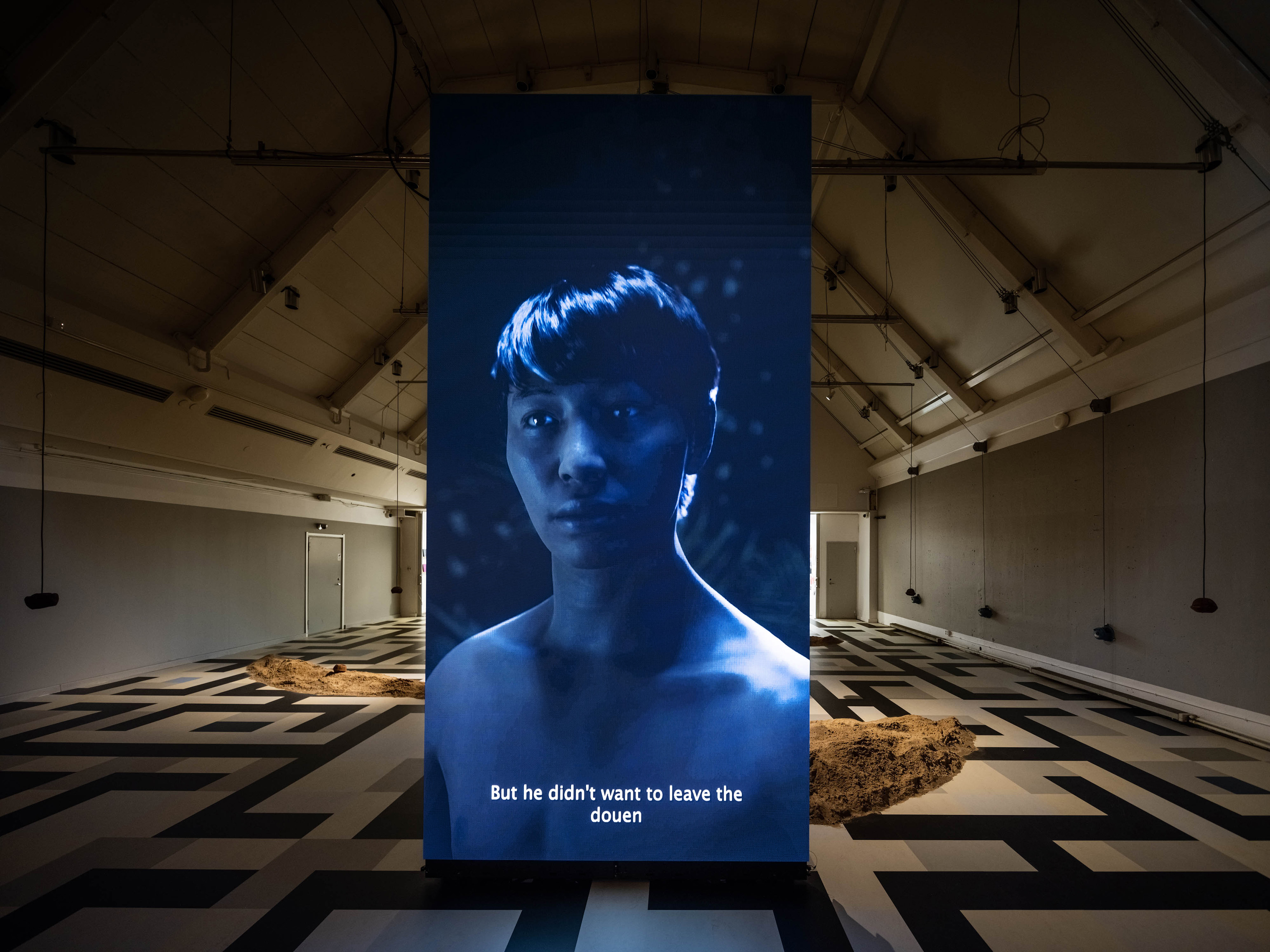
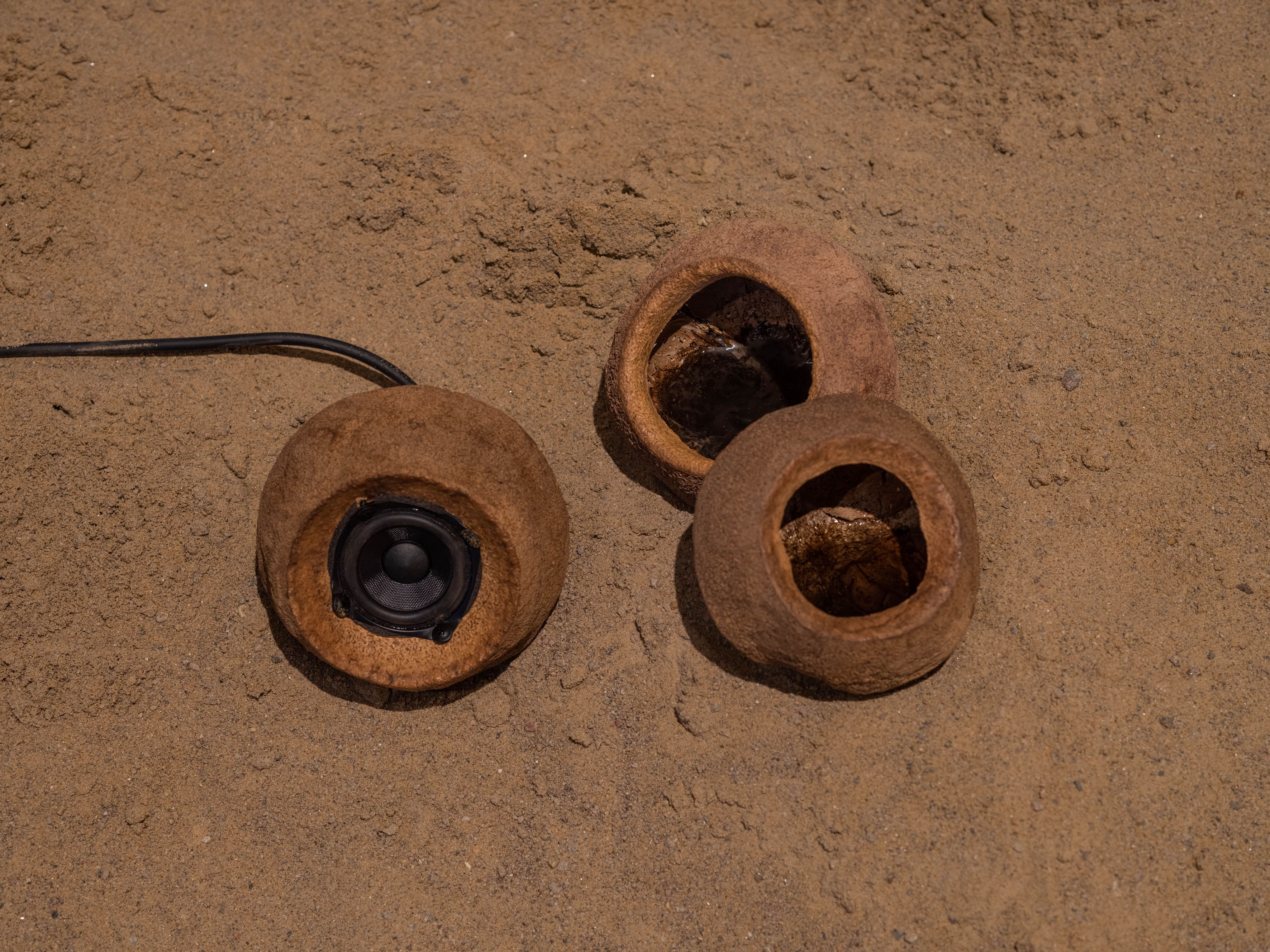
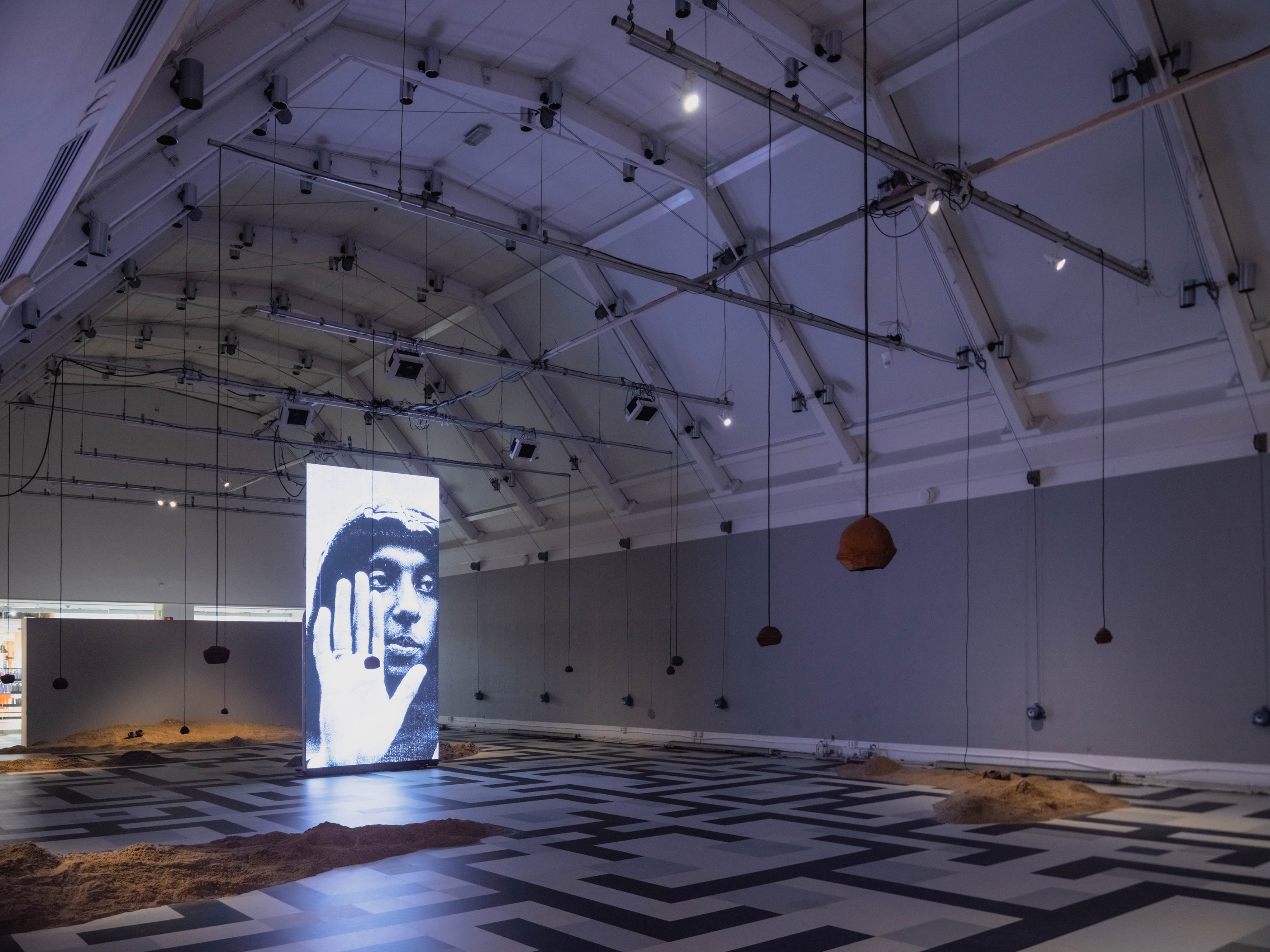
The quote, which belongs to the poet Derek Walcott, can be found in the script of artist Santiago Mostyn’s latest installation, Dream One, produced for Södertälje konsthall. In the central video, the artist meets digital and re-enacted versions of Walcott before his death, with the poet telling a story about a “douen,” a child-like, folkloric creature from Trinidad known for its capacity to lure children deep into the forest. As an artist Santiago Mostyn is well-known for his ability to create politically explosive narratives through an associative, almost lyrical, style of visual storytelling. Dream One is no exception, borne by deep political and ethical dimensions that touch upon subjects such as rootlessness, home and that which remains hidden, perhaps even secret. Images are charged with language and language is charged through image and narration... [continue reading]
- text by Joanna Sandell
E-flux Review by Natasha-Marie Llorens
Installation photographs: Jean-Baptiste Béranger
23 September - 12 November, 2022
“You are illiterate in the way leaves are illiterate: they do not read, they are there to be read; and if they are properly read, they create their own literature.”
The quote, which belongs to the poet Derek Walcott, can be found in the script of artist Santiago Mostyn’s latest installation, Dream One, produced for Södertälje konsthall. In the central video, the artist meets digital and re-enacted versions of Walcott before his death, with the poet telling a story about a “douen,” a child-like, folkloric creature from Trinidad known for its capacity to lure children deep into the forest. As an artist Santiago Mostyn is well-known for his ability to create politically explosive narratives through an associative, almost lyrical, style of visual storytelling. Dream One is no exception, borne by deep political and ethical dimensions that touch upon subjects such as rootlessness, home and that which remains hidden, perhaps even secret. Images are charged with language and language is charged through image and narration... [continue reading]
- text by Joanna Sandell
E-flux Review by Natasha-Marie Llorens
Installation photographs: Jean-Baptiste Béranger


Umdrehen
Susanna Marcus Jablonski & Santiago Mostyn
Single-channel 4K video projection with sound (13’47”), printed voile fabric, ceramic stoneware clay, postcards, Ciné-Kodak Eight Model 60 film camera.
Through film, hanging textiles and skeletal ceramic sculptures, Susanna Jablonski and Santiago Mostyn’s installation examines the role of image making in relation to history, looking closely at how images of historical violence, and their appropriation, might shape our understanding of the present day.
Their co-authored film, Umdrehen, juxtaposes audio from the 1981 testimony of a German naval sergeant, Reinhard Wiener – who partially filmed the mass murder of Jewish residents of Liepaja, Latvia in the summer of 1941 – with images recorded by Jablonski and Mostyn at the site of the massacre in 2021. The artists’ camera moves through the landscape in response to Wiener’s description of what he saw that day, taking the viewer into the same forested, coastal landscape and finally to the trench where the atrocities took place.
Characterised as a wartime trophy, Wiener’s archival footage later circulated as evidence in the Holocaust trials and as material for documentary and feature films but remains deliberately not shown here. The artists’ installation questions the function and agency of the camera in describing history, asking how historical events leave traces in landscapes, and how one can approach, retell, or represent a horrific event without reproducing its depiction of violence.
First image by GRAYSC; other images by Helene Torresdotter and Henrik Hellström.
Susanna Marcus Jablonski & Santiago Mostyn
Single-channel 4K video projection with sound (13’47”), printed voile fabric, ceramic stoneware clay, postcards, Ciné-Kodak Eight Model 60 film camera.
Through film, hanging textiles and skeletal ceramic sculptures, Susanna Jablonski and Santiago Mostyn’s installation examines the role of image making in relation to history, looking closely at how images of historical violence, and their appropriation, might shape our understanding of the present day.
Their co-authored film, Umdrehen, juxtaposes audio from the 1981 testimony of a German naval sergeant, Reinhard Wiener – who partially filmed the mass murder of Jewish residents of Liepaja, Latvia in the summer of 1941 – with images recorded by Jablonski and Mostyn at the site of the massacre in 2021. The artists’ camera moves through the landscape in response to Wiener’s description of what he saw that day, taking the viewer into the same forested, coastal landscape and finally to the trench where the atrocities took place.
Characterised as a wartime trophy, Wiener’s archival footage later circulated as evidence in the Holocaust trials and as material for documentary and feature films but remains deliberately not shown here. The artists’ installation questions the function and agency of the camera in describing history, asking how historical events leave traces in landscapes, and how one can approach, retell, or represent a horrific event without reproducing its depiction of violence.
First image by GRAYSC; other images by Helene Torresdotter and Henrik Hellström.